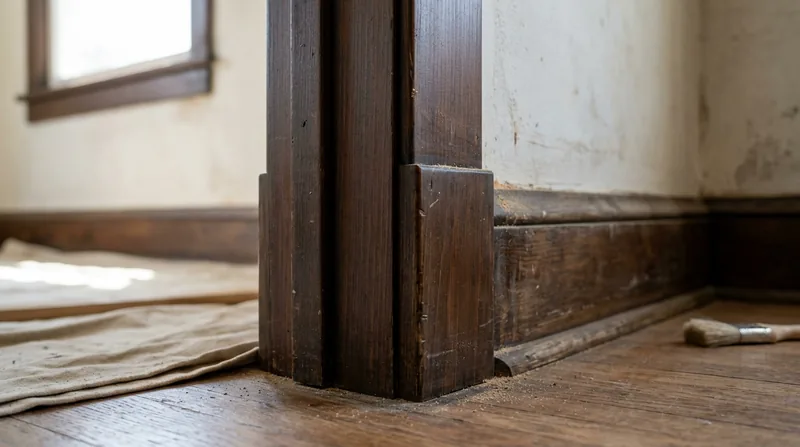




Finish and trim carpentry in Santa Clarita demands precision that separates a real craftsman from a handyman. Santa Clarita's residential mix, from 1920s board-and-batten cottages in Old Town Newhall to Craftsman bungalows, 1960s ranch homes across Saugus and Canyon Country, and newer master-planned two-stories in Valencia and Stevenson Ranch, each presents distinct trim and casing profiles that must be replicated or restored with tight miters, scribed fits, and consistent reveals. The long, hot summers that regularly exceed 100 degrees bake south- and west-facing trim and fascia until paint fails and wood checks, while winter moisture from sprinkler overspray and occasional heavy storms tests the durability of interior casing and baseboard. Whether you're finishing a new room, restoring original millwork in a Craftsman home, or installing custom wainscoting and built-ins, the difference between adequate and excellent lies in the details. We handle casing, crown molding, baseboard, paneling, and custom trim work throughout Santa Clarita homes, old and new, with the same carpenters on every job.
Why Finish and Trim Carpentry Matters in Santa Clarita's Diverse Housing Stock
Santa Clarita's homes span nearly a century of building styles, and each era has its own trim language. A 1930s Craftsman bungalow in Newhall expects quarter-round casing, deep baseboards, and authentic reveals that reflect the era. A 1970s ranch across Saugus may have simpler, cleaner lines. A contemporary Valencia home with open concept rooms needs modern casings and seamless transitions. Paint failure, wood movement, and the occasional sticking door or misaligned casing happen in every climate, but the valley's extreme heat and seasonal moisture swings accelerate both cosmetic wear and functional problems. Gaps open between casing and jamb. Baseboards separate from the wall. Crown molding loses its crisp reveal. Proper finish carpentry restores these details and prevents water infiltration that can lead to larger structural problems downstream.
- Restore original casing and baseboard profiles in older Newhall and canyon homes to match historical detail and character.
- Install new interior casing, crown molding, and baseboard throughout remodeled or new-construction rooms with consistent reveals and tight joints.
- Repair or replace damaged door jambs, casings, and thresholds on interior doors to restore smooth operation and water-tight seals.
- Build and install custom wainscoting, paneling, and built-in shelving tailored to the room's proportions and the home's architectural style.
- Scribe and fit trim around irregular walls, windows, and architectural features so joints appear seamless and reveals stay uniform.
Each of these tasks requires the hand skills and eye for detail that separate finish carpentry from rough framing or general handyman work.
Local example: A 1940s Craftsman bungalow in Old Town Newhall had original 3.5-inch baseboards and quarter-round crown with a consistent 1.5-inch reveal around all walls. When the owner remodeled the kitchen, new drywall and cabinetry threw off the reveal and left gaps where new casing met old. Proper finish carpentry meant scribing and fitting new casing to the existing wall plane, matching the profile, and restoring the reveal so the eye reads the room as cohesive rather than patched.
For more on protecting the structural wood underneath, see our wood rot and dry rot repair service.
How We Approach Finish and Trim Carpentry in Santa Clarita Homes
Real finish carpentry starts with careful measurement, understanding the home's architectural language, and planning joints so they remain tight as the wood moves with seasonal humidity changes. We don't rush trim work or force fit pieces; we scribe, cope, and cut to the actual wall and opening rather than assuming straight lines or square corners. On new construction or major remodels, we ensure casings, baseboards, and crown molding are installed square and level before finish nailing. On restoration work in older Santa Clarita homes, we match profiles, stain, and finishes to the original wherever possible, and we explain where modern materials offer durability advantages (e.g., primed MDF trim in high-moisture areas instead of solid wood that may swell or rot).
- Measure and plan the room's casing, crown, and baseboard layout so reveals are consistent and joints land in the least visible spots.
- Cut and install door casings, window casings, and base trim with tight miters and scribed returns that eliminate gaps as the wood moves.
- Use proper fastening techniques: finish nails or pneumatic brad nails set just below the surface, never so deep they crush the wood or leave dimples.
- Cope internal crown molding joints rather than miter them, so the joint remains tight even if the wall is slightly out of square or the wood shrinks.
- Sand, stain, and finish trim on-site or pre-finish in the shop and touch up on installation, depending on the room's dust and timeline constraints.
- Scribe custom wainscoting, shelving, and built-ins to fit the actual wall plane, so panels sit flush and shelves appear level even if the wall bows.
This methodical approach takes longer than rushing, but the result is trim that looks right and stays tight for decades, not just months.
Concrete example: A master bedroom remodel in Stevenson Ranch required new crown molding around an 18-foot by 14-foot room. Instead of mitering all four corners (which invites gaps if the walls aren't perfectly square), we coped three corners and mitered only the door entrance, where the joint is least visible. The room stayed dust-sealed during finish work, and the homeowner painted the crown after installation. Eighteen months later, no gaps appeared, even though the valley's summer heat and winter humidity swings are significant.
Learn more about the structural carpentry that supports finish work in our framing and structural carpentry service.
| Approach | Description | Best for |
|---|---|---|
| Mitered trim | 45-degree angle cuts where two pieces of trim meet, creating a clean diagonal line. | Exterior corners, door casings, and design-forward applications where the miter is a visual feature. |
| Coped joints | One piece of trim is cut to fit the profile of the other, like a puzzle piece, so the joint remains tight as wood moves. | Interior crown molding, baseboards in high-traffic areas, and any joint where the wall may be slightly out of square. |
| Scribed fit | Trim is cut to match the exact contour of an irregular wall, ceiling, or existing surface so no gaps remain visible. | Custom wainscoting, shelving against wavy plaster, and trim around architectural features or in older homes where walls are not perfectly straight. |
| Built-in cabinetry | Custom shelving, bookcases, and storage units built on-site to fit the exact dimensions and style of the room. | Master bedrooms, home offices, living rooms, and any space where off-the-shelf cabinets don't fit or match the home's character. |
| Profile matching | Existing casing, baseboard, or crown molding is analyzed and replicated in new sections so the entire room appears original. | Restoration of Craftsman bungalows, Spanish Revival homes, and any historic property where original millwork must be preserved or extended. |
Finish and Trim Carpentry Cost in Santa Clarita: What to Expect
Finish carpentry pricing depends on the scope of trim, the complexity of the room, and the quality of materials and finish. A straightforward project, installing basic casing around a single door or baseboard in one room, might start at $550 and scale up from there. A full-room trim package with crown molding, casing, baseboard, and matching door frame can easily reach $2,500 to $4,500, depending on the room's perimeter and the profile of the trim. Custom wainscoting, built-in shelving, or panel work adds significantly more, as each piece must be measured, cut, and fitted individually. The valley's heat and humidity also mean that pre-finishing trim in the shop (rather than finishing on-site) often costs more but delivers superior results and keeps the homeowner's space cleaner during the job.
Several factors move the cost up or down. A room with square walls and standard openings costs less than one with angled ceilings, irregular walls, or multiple architectural features to work around. Material choice matters too: solid wood costs more than primed MDF but offers better durability in high-moisture areas like kitchens and bathrooms. Profile complexity also affects price; a simple ranch baseboard takes less time than a detailed Craftsman baseboard with multiple moldings. The best way to understand cost for your specific project is to request a free estimate and get 2 to 3 quotes so you can compare scope, materials, and timeline. See our full pricing overview for more detail, and call (661) 533-4577 to schedule an on-site look.
Finish and Trim Carpentry Near Me: What Santa Clarita Homeowners Should Know When Hiring
Finding a qualified finish carpenter in Santa Clarita means looking for someone with a real portfolio of trim work, not just general carpentry or handyman experience. The difference between a finish carpenter and a general contractor is precision: tight joints, consistent reveals, and the ability to scribe and fit custom work to the actual house, not a tape measure. When you call to get an estimate, ask to see photos of recent work or, better yet, ask for references you can visit. A real finish carpenter will be happy to show you a Craftsman home where crown molding was restored, or a new build where casing and built-ins were installed to match the owner's vision. Fully insured status is essential; ask for a certificate of insurance before work starts. For any trim work that involves structural alterations (e.g., removing a wall to open a room and rerouting trim), check with your local Santa Clarita building department to understand permit requirements; rules vary, and your contractor should help you navigate them. If your home is in an HOA community like Stevenson Ranch or Fair Oaks Ranch, review any design guidelines before starting, as some communities have restrictions on finish materials or color. Get your estimate in writing, with a clear breakdown of materials, labor, timeline, and any assumptions about existing conditions. Contact us for a free estimate at our contact page or call (661) 533-4577.
Finish & Trim Carpentry in Santa Clarita: Pricing Guide
| Service | Price | Details |
|---|---|---|
| Single door casing or baseboard section | Starting at $550 | Basic interior casing or baseboard installation in one location, including material, labor, fastening, and finish touch-up on-site |
| Full-room trim package | Starting at $2,500 | Crown molding, casing around all doors and windows, and baseboard throughout one room, with consistent reveals and tight joints |
| Custom wainscoting or built-in shelving | Starting at $3,500 | Custom-fitted paneling, shelving, or cabinetry built on-site to match the room's dimensions and architectural style, including material and finish |
| Profile restoration or replication | On estimate | Matching and extending existing Craftsman or historic trim profiles requires on-site analysis to source or mill matching material and plan the job accurately |
| Travel | Included | No separate call-out or mileage charge for Santa Clarita and surrounding service areas; drive time is factored into the estimate |
| Free estimate | No obligation | Response within 24 hours at (661) 533-4577; on-site measurement and consultation at no charge before you decide to book |
Indicative pricing, the exact cost depends on square footage, finish, and site access. Free personalized estimate within 24h at (661) 533-4577.


