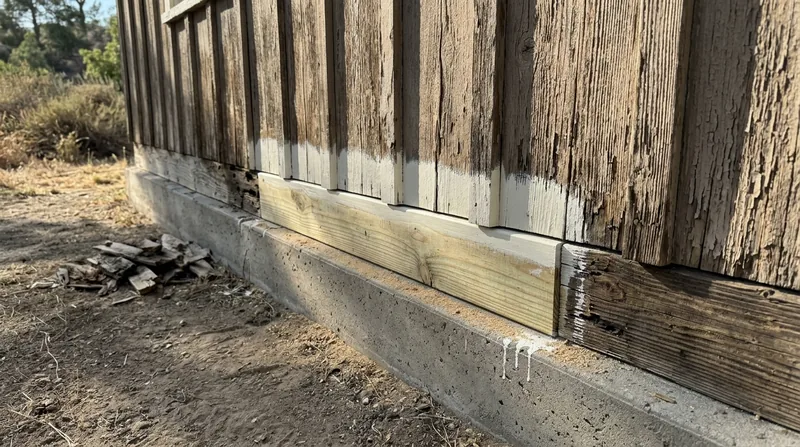




Santa Clarita's Craftsman cottages, Spanish Revival homes, and sprawling ranch properties face a relentless water problem. Daily sprinkler overspray along the base of siding, heavy winter storms that soak sill plates and rim joists, and sun-cracked paint that fails on south and west-facing fascia all work to push moisture deep into the framing. Wood rot and dry rot repair in Santa Clarita means cutting out the decayed wood, treating the surrounding framing, and rebuilding with rot-resistant lumber. That is a permanent structural repair, not a cosmetic patch or a band-aid. We explain what you have, what it will cost to fix, and whether repair is honest or whether replacement is the answer.
Why Water Damage and Rot Matter in Santa Clarita Homes
The Santa Clara Valley sits on a graded bench of chaparral hillsides, and most homes are either on concrete slabs or on raised floors above crawlspaces. That grade work and the long, hot summers create two specific rot problems. First, daily automatic sprinkler systems soak the base of exterior siding and deck posts, and the water wicks upward into the wood grain. Second, the intense sun bakes paint until it cracks and peels, opening pathways for winter storm water to penetrate the framing beneath. Once water gets into Douglas fir studs, redwood siding, or pressure-treated rim joists, decay spreads quietly inside the wall cavity.
- Sprinkler overspray and landscape irrigation soak siding bottoms and deck posts year-round, creating the ideal conditions for fungal decay.
- Sun-cracked exterior paint on south and west-facing walls fails faster in Santa Clarita's intense inland light, exposing raw wood to rain and moisture.
- Crawlspace homes on raised floors in Newhall and canyon properties are especially vulnerable because water can pool under the house and wick up through sill plates and floor joists.
- Older Craftsman bungalows and Spanish Revival cottages often have single-layer siding and minimal flashing, making them more prone to water infiltration than newer stucco tract homes.
Catching rot early and removing only the decayed wood keeps repair costs down and preserves the structural integrity of your home.
Local context: Santa Clarita's daily high temperatures regularly exceed 100 degrees in summer, and the dry heat causes paint to fail faster than in coastal areas. Combined with automatic irrigation systems that run daily, the result is predictable: water intrusion into framing happens silently, and by the time you notice soft wood or staining on interior drywall, decay has already spread.
For more information on related structural damage, see our page on termite damage repair in Santa Clarita, which often occurs alongside water damage in the same framing members.
How We Repair Wood Rot and Dry Rot in Santa Clarita Homes
Our process starts with a clear diagnosis. We probe the suspect wood with a moisture meter and a awl to locate the extent of decay, then we cut out all soft, discolored, or compromised framing. We treat the healthy wood surrounding the repair with a wood preservative to stop new decay from spreading. Then we rebuild using pressure-treated lumber or naturally rot-resistant species, and we flash or seal the repair to stop water from returning to that spot. Every step is documented so you have a record of what was done and why.
- We inspect the affected area with moisture readings and probe testing to confirm the extent of rot and identify all compromised wood.
- We cut out all decayed framing, siding, or trim using hand tools and saws, working carefully to preserve sound wood and minimize structural disruption.
- We treat the exposed healthy wood with a wood preservative to inhibit future fungal growth and decay.
- We rebuild the repair using pressure-treated lumber, naturally resistant species, or marine-grade plywood, depending on the location and exposure.
- We flash, caulk, or seal the repair to prevent water from re-entering the same spot, addressing the root cause of the rot.
- We prime and paint exterior repairs to match the surrounding finish and protect the new wood from UV and weather.
The entire approach is built around stopping the water source and replacing only what is truly decayed, not tearing out sound framing for the sake of a wholesale replacement.
Example from the field: A Craftsman cottage in Old Town Newhall had water-damaged sill plates under a side porch where the gutter had failed and sprinkler overspray collected. We removed the rotted section of sill plate, treated the rim joist above it with preservative, sistered in a new pressure-treated sill, and re-flashed the porch connection. The repair cost far less than replacing the entire porch structure, and the house was sound again.
For larger structural concerns, such as compromised floor joists or sagging subfloors, we work with your own structural engineer if needed. See our page on floor joist and subfloor repair in Santa Clarita for more detail on those jobs.
Wood Rot Repair Methods: Which Approach Works Best
| Approach | Description | Best for |
|---|---|---|
| Localized removal and replacement | Cut out only the decayed section, treat adjacent wood, and rebuild with pressure-treated lumber or rot-resistant species. | Sill plates, rim joists, siding sections, fascia, and deck posts where decay is limited to one or two framing members. |
| Sistering or reinforcement | Bolt or screw a new structural member alongside a partially compromised joist or beam to restore load capacity without full replacement. | Floor joists, rim joists, and beams where the core structure is sound but the outer edge or face is decayed. |
| Full member replacement | Remove an entire joist, beam, sill plate, or stud and install a new one, often with temporary support during the work. | Load-bearing walls, main beams, or floor joists where decay extends through the entire cross-section or compromises more than 30 percent of the member. |
| Epoxy consolidation or hardening | Inject or apply epoxy to partially decayed wood to harden and stabilize it, used only where structural demand is low and decay is shallow. | Non-structural trim, casing, fascia, or siding where appearance and weather-shedding matter more than load capacity. |
The right method depends on how deep the decay runs, how much of the member is compromised, and what load that member must carry. We assess all of this on site and propose the most cost-effective repair that will last.
Wood Rot and Dry Rot Repair Cost in Santa Clarita: What to Expect
Wood rot repair in Santa Clarita typically starts at around $650 for a small, localized repair such as a rotted fascia section or a single sill plate patch. From there, cost scales with the size of the damaged area, the number of framing members involved, and how accessible the decay is. A full floor joist replacement or a large section of siding removal and rebuild can run $2,500 to $5,000 or more, depending on the scope and whether temporary support or shoring is needed during the work.
Several factors move the price up or down within these ranges. If the decay is in a crawlspace or attic, access is harder and labor takes longer. If the rot has spread across multiple joists or studs, you are looking at more removal and more new lumber. If the job requires temporary support beams or posts to hold up the structure while you work, that adds cost and time. If the repair involves a load-bearing wall or main beam, a structural engineer may be required to size the replacement member and verify the repair, which adds engineering fees but ensures the work is safe and code-compliant.
The best way to get an accurate number is to have us come out and look. We will give you a free estimate within 24 hours and explain exactly what needs to come out and what will go back in. If you want to compare approaches or get a second opinion, getting two or three estimates is smart and common. For a complete overview of our pricing across all services, visit our full pricing page.
Wood Rot and Dry Rot Repair Near Me: What Santa Clarita Homeowners Should Know When Hiring a Contractor
Finding the right carpenter to handle wood rot repair means looking beyond price alone. You want someone who will diagnose the problem honestly, explain why the decay happened, and propose a repair that matches the severity and location of the damage. Ask any contractor you call whether they carry full insurance and whether they can provide references from recent jobs in Santa Clarita or your neighborhood. If the repair involves a load-bearing wall or a main structural beam, ask whether they work with a structural engineer or whether they recommend you hire one separately. Some jobs require permits, especially if they involve altering framing or load paths, so ask your contractor whether they have experience pulling permits with the Santa Clarita Building and Safety Division and whether they will handle that paperwork or leave it to you.
- Confirm that the contractor carries full insurance and can provide a certificate of insurance before work begins.
- Ask for references from three recent jobs in Santa Clarita, Stevenson Ranch, or Castaic, and actually call them to ask about the quality of the work and whether the contractor showed up on time and stayed within budget.
- Request a detailed written estimate that lists what will be removed, what will be replaced, and what the repair will cost, not just a lump-sum number.
- Verify whether the job will need a permit by checking with the Santa Clarita Building and Safety Division, and ask the contractor whether they will pull it or advise you on the process.
- If you live in a homeowners association or a historic district, ask whether there are any restrictions on exterior repair or replacement materials, and confirm that the contractor will comply with those rules.
We are fully insured, and we work locally in Santa Clarita and the surrounding communities. If you want to discuss your rot problem or get a free estimate, call us at (661) 533-4577 or visit our contact page to request an appointment.
Wood Rot & Dry Rot Repair in Santa Clarita: Pricing Guide
| Service | Price | Details |
|---|---|---|
| Small localized rot repair | Starting at $650 | Single fascia section, sill plate patch, or small siding area; includes removal, treatment, and rebuild with new lumber |
| Medium repair (multiple members or larger area) | Starting at $1,200 | Two to three joists, full sill section, or large fascia; includes access, removal, preservative treatment, and pressure-treated replacement |
| Full joist or beam replacement | Starting at $2,500 | Single floor joist or rim joist replacement; includes temporary support, removal, new lumber installation, and flashing or sealing |
| Large-scale structural repair | On estimate | Multiple joists, load-bearing wall section, or extensive crawlspace decay; requires site inspection to determine scope and temporary support needs |
| Estimate | Free | Response within 24 hours at (661) 533-4577, site visit included, no obligation to book |
Indicative pricing, the exact cost depends on square footage, finish, and site access. Free personalized estimate within 24h at (661) 533-4577.


