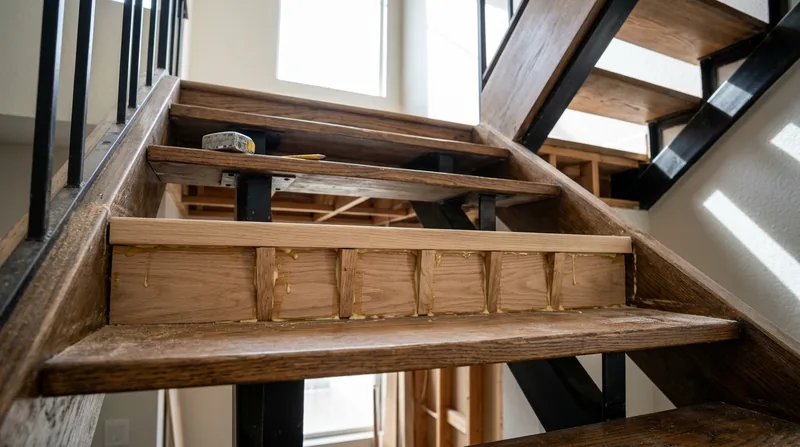




Santa Clarita's hillside homes, ranch properties, and two-story master-planned communities all depend on solid stairs and railings that homeowners climb and lean on every single day. Whether you're in a 1920s Craftsman bungalow in Old Town Newhall, a wood-sided ranch in Canyon Country, or a newer Valencia two-story with a hillside deck, stair and railing repair in Santa Clarita is a structural safety issue that gets worse with every footfall and every season of heat, dryness, and occasional heavy rain. Squeaky treads, loose banisters, worn stringers, cracked treads, and wobbling railings are not cosmetic problems. We repair and rebuild the open staircases Santa Clarita's homes climb every day, restore older railings to code, and install solid, properly anchored handrails and attic ladders. When the wood is sound, we reinforce and tighten. When it's damaged by rot, dry rot, or termite galleries, we sister joists, replace stringers, and rebuild treads and risers in matching species. Our carpenters handle the same job from start to finish, explain what went wrong, and get it right the first time.
Why Stair and Railing Safety Matters in Santa Clarita's Hillside and Two-Story Homes
Santa Clarita's terrain ranges from flat slab-on-grade tracts in Valencia and Saugus to steep hillside lots in Placerita Canyon, Sand Canyon, and the ridge-top communities of Stevenson Ranch and Westridge. Two-story homes, split-level ranches, and homes with decks and basements all mean stairs and railings that carry daily traffic, support weight, and take the punishment of Santa Clarita's long, hot, dry summers and occasional winter storms. The Santa Clara River basin's hard, bright inland sun bakes south and west-facing wood until paint fails, wood checks and splits, and moisture enters through gaps and cracks. Drywood and subterranean termites are a year-round threat in Southern California wood. Stair treads and stringers soften, railings loosen at their anchors, balusters crack, and newel posts shift when fasteners corrode or wood fibers break down.
- Squeaky or bouncy treads indicate fasteners are loose, stringers are cracked, or underlying joists have moved.
- Loose or wobbly railings and balusters fail to support a person's weight and do not meet current building code.
- Cracked or split treads and stringers can trap feet, create trip hazards, and expose rot or insect galleries underneath.
- Worn stringer edges and riser boards show water damage, wood movement, and the beginning of structural failure.
- Attic stairs and fold-up ladders with broken hinges, cracked treads, or loose hardware pose fall and entrapment risks.
Stair and railing repair keeps your home safe, prevents liability, and stops damage from spreading into rim joists, floor framing, and the rest of your structure.
Key info: Stairs and railings in California homes must meet current International Building Code standards for tread depth, riser height, handrail diameter, and baluster spacing. If your stairs are original to a 1920s or 1960s home, they may not meet modern code. We bring them into compliance as part of the repair, and address any permits your local building department requires.
For more information on structural safety and permits, consult the California Department of Industrial Relations, which oversees workplace and residential safety standards.
How We Repair and Rebuild Stairs and Railings in Santa Clarita
Our process starts with a clear assessment of what's broken, why it failed, and whether the underlying wood is sound enough to repair or needs replacement. We look for rot, termite galleries, water stains, fastener corrosion, and wood movement. We measure treads and risers, inspect stringers for cracks or soft spots, check handrails for loose anchors, and test baluster and newel post security. Once we understand the scope, we explain your options in plain language, give you a firm price, and do the work with the same carpenters from start to finish.
- We inspect the entire staircase structure, including stringers, treads, risers, railings, handrails, and fasteners.
- We probe for wood rot and dry rot with a moisture meter and awl, and look for termite galleries or prior damage.
- We tighten or replace fasteners, reinforce loose connections, and shore up cracked or split treads with sistering or capping.
- We replace damaged stringers or treads with solid wood in a matching species, maintaining the original style where possible.
- We install new handrails, balusters, and newel posts to current code, using proper fastening and blocking.
- We finish the work with sanding, staining, or paint to match your home's interior or exterior trim.
The result is a staircase that feels solid underfoot, a railing you can trust, and a home that is safer and more valuable.
Local example: A 1960s ranch home in Saugus had a squeaky second-floor staircase with loose balusters and a cracked stringer at the landing. The stringers were Douglas fir, sound beneath the surface, but fasteners had rusted and the connection to the rim joist had shifted. We removed the balusters, tightened and replaced fasteners, reinforced the stringer connection with blocking and new lag bolts, and reinstalled the balusters with new fasteners. The stairs are now rock solid, and no replacement was needed.
For more detail on our finish carpentry work, including trim and custom details, see our finish carpentry service page.
Methods and Materials for Stair and Railing Repair
| Approach | Description | Best for |
|---|---|---|
| Tightening and Fastener Replacement | Remove old nails or screws, inspect for corrosion or wood damage, and replace with new fasteners sized and seated properly for the wood species. | Squeaky treads, loose balusters, and loose handrails when the wood is sound and movement is minimal. |
| Stringer Reinforcement and Sistering | Install blocking beneath stringers, bolt stringers to rim joists and floor framing, or sister a new board alongside a cracked or split stringer to share the load. | Cracked or split stringers, loose connections at landings, and stairs that bounce or move under weight. |
| Tread and Riser Replacement | Remove damaged treads or risers and install new wood in a matching species, fastened securely and finished to match existing trim. | Rotted, split, or worn treads; damaged risers; and treads that no longer meet code for depth or slip resistance. |
| Baluster and Railing Replacement | Install new balusters spaced to code, secure newel posts with bolting and blocking, and install new handrails with proper diameter and anchoring. | Cracked or split balusters, loose newel posts, damaged or missing handrails, and railings that do not meet current code spacing. |
| Attic Stair and Ladder Repair | Repair or replace hinges, treads, fasteners, and hardware on fold-up attic stairs and pull-down ladders; ensure safe operation and secure closure. | Squeaky or sticking attic stairs, broken hinges, cracked treads, and ladders that do not close or latch securely. |
Stair and Railing Repair Cost in Santa Clarita: What to Expect
Stair and railing repair in Santa Clarita typically starts at $600 to $1,200 for straightforward tightening, fastener replacement, and minor tread or baluster work on a single flight of stairs. More complex jobs, such as stringer replacement, railing code compliance, or repair of multiple flights or decks, range from $1,500 to $4,000 or more, depending on the extent of damage, wood species, and whether the work requires structural reinforcement or new framing. Attic stair and ladder repairs often run $400 to $900 for hinge replacement, tread repair, or hardware fixes. The main factors that affect cost are the number of stairs, the extent of rot or termite damage, whether stringers or major structural elements need replacement, access to the work, and whether your local building department requires a permit for the scope of the repair.
We recommend getting 2 to 3 estimates from local carpenters so you can compare scope, materials, and timeline. A low price often reflects a low scope; a high price should be explained in detail. Our estimate is free and includes a written scope and price before work begins. Call us at (661) 533-4577 or visit our pricing page for a full breakdown of typical stair and railing repair costs in Santa Clarita and the surrounding area.
What to Look for When Hiring a Carpentry Contractor Near Santa Clarita
Stair and railing repair is a structural safety job, not a cosmetic one. When you hire a carpenter, make sure they understand the difference between a quick fix and a proper repair. Ask whether the same carpenters will do the work from start to finish, not a rotating crew or subcontractors. Request references from recent stair or railing jobs in Santa Clarita or the surrounding area, and ask what the customer's experience was with communication, timeline, and quality. If your stairs are original to a historic home or your HOA has design guidelines, confirm that the contractor understands those requirements before you commit. For structural repairs or code compliance work, check whether your local building department requires a permit. Santa Clarita's Building and Safety Division can tell you whether a permit is needed for your specific scope. Never hire a contractor who promises to waive or absorb a building permit or who says a permit is unnecessary when one may be required.
- Ask whether the contractor is fully insured and can provide a current certificate of insurance before work begins.
- Request a written scope of work, a firm price, and a timeline for completion before signing any agreement.
- Verify that the contractor understands current building code for stair dimensions, riser height, tread depth, handrail diameter, and baluster spacing.
- Check whether the contractor has experience with your home's era and style, especially if your stairs are original or historic.
- Ask about the warranty on the work and what happens if a problem arises after completion.
A local carpenter who listens, explains the problem clearly, and stands behind the work is worth more than a low price. Contact us at Santa Clarita Carpentry for a free estimate and a straight answer about what your stairs need.
Stair & Railing Repair in Santa Clarita: Pricing Guide
| Service | Price | Details |
|---|---|---|
| Tightening and Fastener Replacement | Starting at $600 | Squeaky treads, loose balusters, and minor railing tightening when wood is sound and movement is minimal. |
| Tread or Riser Replacement | Starting at $1,200 | Single damaged or rotted tread or riser, including removal, new wood in matching species, and finishing to match trim. |
| Stringer Repair or Reinforcement | Starting at $1,500 | Cracked stringers, loose connections, sistering, or blocking to stabilize a flight of stairs under load. |
| Baluster and Railing Code Compliance | Starting at $1,800 | New balusters, newel posts, and handrails spaced and anchored to current code, including fastening and finish. |
| Attic Stair and Ladder Repair | Starting at $400 | Hinge replacement, tread repair, fastener tightening, and hardware fixes on fold-up attic stairs or pull-down ladders. |
| Full Staircase Rebuild or Complex Repair | On estimate | Multiple flights, extensive rot or termite damage, structural reinforcement, or code compliance work requires an on-site assessment. |
Indicative pricing, the exact cost depends on square footage, finish, and site access. Free personalized estimate within 24h at (661) 533-4577.


