Drywood Termites vs Dry Rot: What's the Difference?
If you've noticed damage to the wooden structures in your Santa Clarita home, you might be wondering whether you're dealing with drywood termites or dry rot. While both can cause serious structural problems, they are fundamentally different threats that require entirely different solutions. Understanding the distinction is the first step toward protecting your investment and your family's safety.
Drywood termites are insects that actively eat wood as a food source and reproduce within the material. Dry rot, on the other hand, is a fungal disease that breaks down the cellular structure of wood through decay. A termite infestation is a pest control problem, whereas dry rot is a moisture and ventilation issue. Misdiagnosing which problem you have could lead you to spend money on ineffective treatments while the real damage continues to spread. That's why homeowners in Santa Clarita should learn the key warning signs of each.
Signs of Drywood Termites: What to Look For
Drywood termites leave behind unmistakable evidence of their presence, and recognizing these signs early can prevent extensive damage to your home. One of the most telling indicators is the presence of small, pellet-like droppings called frass. These tiny droppings are often mistaken for sawdust, but there's an important difference: termite droppings vs sawdust tells a different story. Termite frass is typically harder, more uniform in size, and often has a six-sided appearance when viewed under magnification. Sawdust from carpenter ants or wood-boring beetles tends to be softer and more irregular in shape.
Another key sign of drywood termites is the appearance of small, clean exit holes in the wood surface, typically about the size of a pencil point. These holes are where the termites emerge to spread to new wood or find mates. You might also notice mud tubes or galleries running through the wood, which the termites create as they tunnel. If you tap on infested wood, it often sounds hollow because termites have eaten out the interior while leaving the outer shell intact. Drywood termites are also more active during warm months, so you may notice increased activity in late spring and summer in the Santa Clarita area.
Detecting drywood termite damage early is crucial because these insects work silently and can compromise the structural integrity of your home over time. If you suspect termite activity, it's important to seek professional help rather than attempting DIY treatments that may not reach the entire colony.
What Does Wood Rot Look Like? Identifying Dry Rot Damage
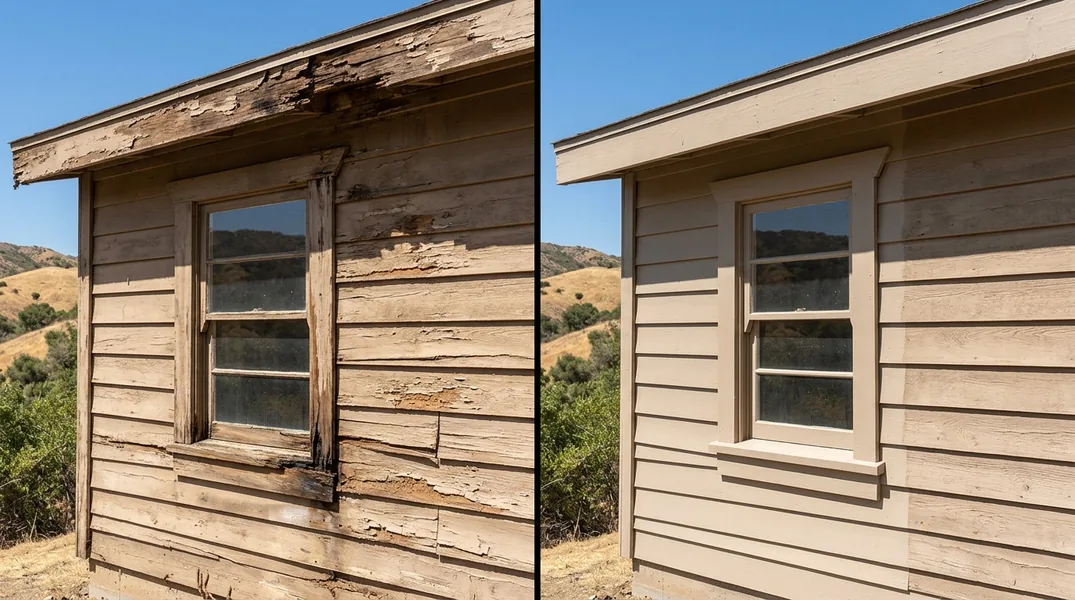
Dry rot presents a very different appearance than termite damage, and learning what does wood rot look like will help you distinguish between these two common wood-destroying problems. Dry rot typically manifests as a soft, crumbly texture in the affected wood. The wood may appear darker than surrounding areas, often taking on a brownish or grayish discoloration. Unlike the clean exit holes left by termites, dry rot creates a more diffuse pattern of decay that spreads throughout the wood grain.
One of the most distinctive features of dry rot is the presence of visible fungal growth, which may appear as white, thread-like mycelium or a fuzzy coating on the wood surface. The wood itself becomes increasingly brittle and may crumble or break apart easily when touched or probed. Dry rot thrives in damp, poorly ventilated environments, so you're more likely to find it in basements, crawl spaces, under sinks, around windows, or anywhere water has been present. The decay spreads more slowly than termite damage but can be equally destructive if left untreated.
The key difference in appearance is that termite damage leaves structural voids with intact outer surfaces, while dry rot creates visible decay and softening throughout the affected area. Dry rot also often has a distinctive musty smell, similar to mushrooms or damp soil. If you notice any of these signs, Wood Rot & Dry Rot Repair should be your next step to prevent further deterioration of your home's structural components.
How to Tell Termite Droppings Apart from Sawdust and Other Wood Debris
One of the most practical ways to diagnose whether you have termites is to carefully examine any debris you find near suspected damage areas. Termite droppings vs sawdust is a common question homeowners ask, and the answer can be surprisingly revealing. Termite frass is typically very fine and uniform, with a granular texture that resembles coarse sand or coffee grounds. The color is usually tan, brown, or reddish-brown, depending on the type of wood the termites have been consuming. When you look closely, you'll notice the pellets are roughly hexagonal in shape, which is a distinctive characteristic of drywood termite frass.
Sawdust, by contrast, tends to be coarser and more fibrous in appearance. It often contains larger wood particles and splinters and doesn't have the uniform pellet shape of termite droppings. If you find piles of this material near baseboards, inside wall cavities, or around wooden beams, it's a strong indicator of termite activity. To confirm your suspicion, collect a sample and examine it with a magnifying glass or smartphone camera with macro capability. The difference becomes much clearer with magnification. Sawdust from carpenter ants also tends to include larger wood fragments and may have a slightly different texture altogether.
Another way to distinguish between termite droppings and other debris is to consider the location and pattern. Termite frass typically accumulates directly beneath the damaged wood, often in small piles at the base of walls or inside wall cavities. The material is also relatively dry, whereas wood debris from carpenter ants might be mixed with moisture or other organic matter. If you're uncertain about what you've found, professional pest inspection services and Termite Damage Repair specialists can provide definitive identification and recommend appropriate treatment options.
When to Call a Professional: Repair and Restoration Options
Once you've identified whether your home has termite damage or dry rot, the next step is determining whether you can handle repairs yourself or need professional assistance. While minor surface damage might seem manageable, both termite damage and dry rot can compromise structural integrity in ways that aren't immediately visible. Structural elements like floor joists, beams, and load-bearing walls require expert evaluation and repair to ensure your home remains safe and up to code.
For termite damage, you'll typically need two types of professional help: a pest control specialist to eliminate the termites, and a carpenter to repair or replace the damaged wood. For dry rot, the focus shifts to addressing the underlying moisture problem while simultaneously restoring the compromised wood. Floor Joist & Subfloor Repair is often necessary when either condition affects the foundation of your home. In more severe cases, Beam Replacement & Load-Bearing Wall Removal may be required to restore structural stability.
Santa Clarita Carpentry specializes in comprehensive wood damage restoration, whether the source is termites or dry rot. Our team can assess the full extent of damage, provide a detailed repair plan, and execute the work to restore your home's structural integrity. If you suspect either problem in your home, contact Santa Clarita Carpentry at (661) 533-4577 to schedule a free estimate. Early detection and professional intervention can save you thousands of dollars in long-term repairs and prevent safety hazards.
Prevention Tips: Protecting Your Santa Clarita Home from Future Damage
The best approach to dealing with drywood termites and dry rot is prevention. For termites, regular inspections of your home's wooden structures are essential, particularly in the warm months when termite activity peaks. Look for the warning signs mentioned earlier, and maintain good ventilation in crawl spaces and attics to reduce moisture levels that attract termites. Store firewood away from your home's exterior, and avoid leaving dead wood or mulch piled against the foundation. If you notice any signs of termites, act quickly because early intervention prevents the colony from expanding.
Preventing dry rot requires a focus on moisture control and proper ventilation. Ensure gutters and downspouts direct water away from your foundation, repair any roof leaks immediately, and maintain proper grading around your home so water doesn't pool near the structure. In bathrooms and kitchens, use exhaust fans to reduce humidity, and promptly address any plumbing leaks. Ensure crawl spaces have adequate ventilation, and consider installing a vapor barrier if you don't have one. Regular inspections of areas prone to moisture problems, such as basements and around windows, can catch early signs of decay before they become serious.
If you've already experienced damage from either termites or dry rot, taking preventive measures now will protect your investment and your family's safety. Santa Clarita Carpentry is here to help with both diagnosis and prevention strategies. Whether you need immediate repairs or want to schedule a preventive inspection, don't hesitate to reach out. Call us at (661) 533-4577 or visit our website to learn more about how we can help protect your home.
Looking for a professional carpentry contractor in Santa Clarita? Santa Clarita Carpentry responds fast for all your carpentry needs.
Get a Free QuoteOur services: Wood Rot & Dry Rot Repair · Termite Damage Repair · Floor Joist & Subfloor Repair