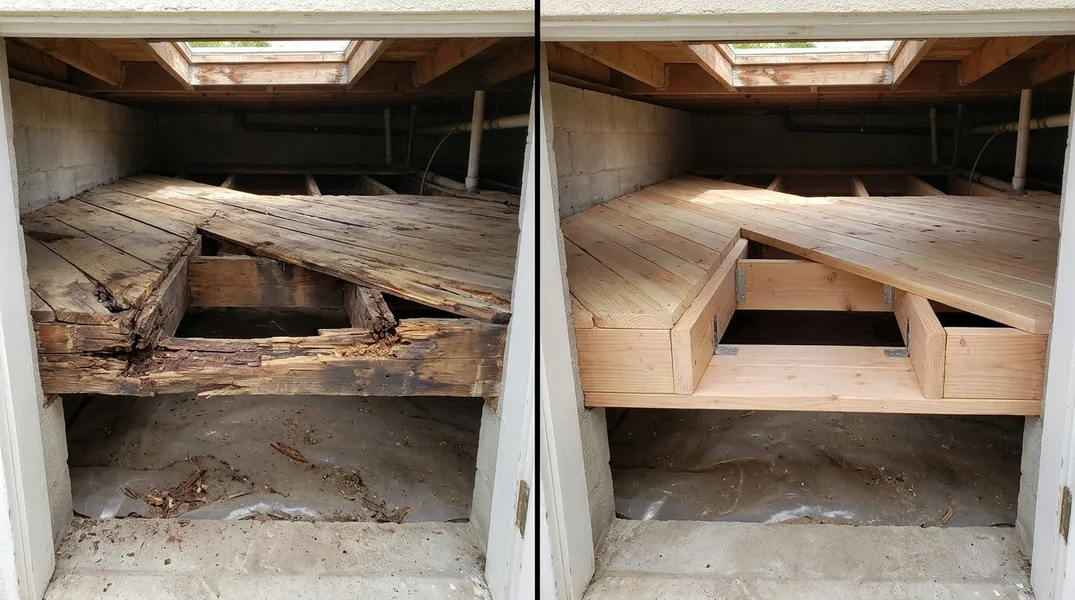
Why Older Newhall Homes Develop Sagging Floors
If you own one of the charming older homes in Newhall, you may have noticed your floors aren't quite level anymore. That slight dip or bounce underfoot isn't just a cosmetic quirk, it's a warning sign that something structural needs attention. Sagging floors in vintage properties are surprisingly common, and understanding the root causes is the first step toward fixing them.
The primary culprit behind sagging floors is deterioration of the floor joists, the wooden beams that support your home's weight from below. In older construction, these joists were often exposed to moisture, poor ventilation, or pest damage over decades. Wood Rot & Dry Rot Repair becomes necessary when moisture seeps into crawlspaces, basements, or areas with inadequate drainage. Dry rot in particular is insidious because it spreads silently through wood, weakening the structural integrity until floors begin to sink. Termite Damage Repair is another common issue in Santa Clarita and surrounding areas, where these destructive pests tunnel through joists and leave them hollow.
Beyond biological damage, simple age and settling can play a role. Older homes were sometimes built with undersized joists by today's standards, and decades of supporting the home's weight takes its toll. Additionally, if a home has undergone renovations or structural changes without proper reinforcement, the load-bearing capacity of the floor system may have been compromised. Poor crawlspace ventilation, standing water, or lack of proper support posts are other common factors that accelerate joist deterioration.
Signs Your Floor Joists Need Repair
Recognizing early warning signs can help you address floor problems before they become dangerous or expensive. The most obvious indicator is a visible sag or dip in the flooring, particularly noticeable when walking across a room or when furniture appears to roll toward one spot. You might also notice doors and windows that don't close properly, or gaps appearing between walls and floors, these are signs that the house is settling unevenly due to compromised support below.
Listen for creaking or bouncing as you walk. While some movement is normal in older homes, excessive flex or a spongy feel underfoot suggests weakened joists. If you have access to your crawlspace or basement, inspect the joists directly. Look for soft, crumbly wood, visible insect damage, discoloration, or a musty smell indicating moisture problems. Stains on joists or subfloors are red flags for past or ongoing water intrusion. If you spot any of these issues, it's time to call in a professional for a thorough assessment.
Floor Joist & Subfloor Repair Options: Sistering and Beyond
Floor Joist & Subfloor Repair involves several proven techniques, depending on the extent of the damage and the specific problems identified. One of the most common and effective solutions is sistering, a method where a new joist (or reinforcement beam) is fastened alongside a damaged or weakened existing joist. This doubles the structural support and restores the floor's ability to carry weight properly. Sistering floor joists is particularly popular because it avoids the need to remove the old joist entirely, which can be disruptive and costly.
The sistering process begins with careful assessment and measurement. A qualified carpenter will install support posts or temporary bracing to carry the load while work is underway. The new joist is then cut to length and securely bolted or bolted and nailed to the existing joist using construction adhesive and fasteners spaced every 12 to 16 inches. This creates a composite beam that's significantly stronger than either piece alone. The process typically takes one to three days depending on the number of joists that need reinforcement and the accessibility of the crawlspace.
In cases where the damage is severe or affects a large area, complete joist replacement may be necessary. This is more involved and typically requires temporary support posts to carry the floor load while the old joist is removed and a new one installed. For homes with multiple damaged sections or where the foundation itself has settled, Beam Replacement & Load-Bearing Wall Removal work may be needed to restore proper support and level the floors. These more extensive repairs require structural engineering and proper permits, which Santa Clarita Carpentry handles as part of our comprehensive service.
Crawlspace Floor Repair in Santa Clarita: What to Expect
Most sagging floor repairs in older homes require work in the crawlspace, the area beneath your first floor. If you've never been down there, it can feel intimidating, but understanding what happens during Santa Clarita crawlspace floor repair will help you feel confident about the process. Before any work begins, a professional inspector will evaluate moisture levels, look for signs of pests, check for proper ventilation, and assess the condition of all support beams and joists. This inspection is crucial because addressing moisture and pest issues is just as important as repairing the structural damage itself.
During the repair work, you can expect the contractor to set up temporary support posts or adjustable jacks to carry the floor load safely. These temporary supports prevent further settling and keep your home stable while the damaged joists are reinforced or replaced. Once the joists are secured, the contractor will check that the floor is level (or as level as possible given the home's age) and then remove the temporary supports. The entire process typically takes between three and seven days, depending on the scope of work. You'll want to avoid walking on the floors directly above the work area during this time, and you may hear noise and vibration from the work below.
After the structural repairs are complete, it's wise to address the underlying causes of the damage. This might include improving crawlspace ventilation, installing a vapor barrier, correcting drainage issues, or treating wood with preservatives to prevent future rot or pest damage. Santa Clarita Carpentry can recommend and implement these preventive measures as part of a comprehensive repair package.
How Much Does Sagging Floor Repair Cost?
The cost of sagging floor repair varies widely depending on the number of joists affected, the type of damage, the size of your home, and the complexity of access. Sistering a single joist might cost anywhere from $500 to $1,500, while a more extensive repair affecting multiple joists or requiring complete joist replacement could range from $3,000 to $10,000 or more. Homes with difficult crawlspace access, severe moisture problems, or structural complications will be on the higher end of the spectrum. To get an accurate idea of pricing for your specific situation, it's essential to have a professional inspection and detailed estimate.
Many homeowners worry that sagging floor repair will drain their budget, but consider the alternative: ignoring the problem allows damage to worsen, which can lead to catastrophic structural failure, foundation damage, and safety hazards. Addressing the issue promptly often costs less than waiting. Additionally, fixing sagging floors increases your home's value and safety, making it a smart investment. Santa Clarita Carpentry offers transparent free estimate consultations so you know exactly what to expect before work begins. We'll walk you through options at different price points and help you prioritize repairs based on safety and your budget.
When to Call a Professional Near Me
While some homeowners are tempted to tackle floor repairs themselves, this is genuinely a job for licensed professionals. Floor joist repair involves structural engineering, building codes, permits, and safety considerations that require training and expertise. Mistakes can compromise your home's safety and lead to costly corrections down the road. A professional contractor will ensure that repairs meet local building codes, obtain necessary permits, and include proper temporary bracing and support throughout the process.
If you've noticed sagging floors, soft spots, or any of the warning signs mentioned above, don't wait. Contact Santa Clarita Carpentry today at (661) 533-4577 to schedule your free estimate. Our team has years of experience repairing sagging floors in older Newhall homes and throughout the Santa Clarita area. We'll diagnose the root cause, explain your repair options in plain language, and provide a detailed estimate so you can make an informed decision. Your home's structural integrity and your family's safety depend on addressing these issues promptly. Let us help restore your floors to solid, level condition.
Looking for a professional carpentry contractor in Santa Clarita? Santa Clarita Carpentry responds fast for all your carpentry needs.
Get a Free QuoteOur services: Wood Rot & Dry Rot Repair · Termite Damage Repair · Floor Joist & Subfloor Repair